
Notes from the BRICS Business Forum in New Delhi on market scale, European certification, and a mushroom farm in Uttarakhand that tested our assumptions harder than any internal review.
We spent 11 September at Bharat Mandapam in New Delhi, at the BRICS Business Forum convened under India’s chairship of BRICS in 2026 and co-organised by FICCI with the Government of India.

The forum’s theme was Building for Resilience, Innovation, Cooperation and Sustainability. We went in with a narrow brief: find buyers, find partners, find capital for an agricultural supply chain business that works with farmer producer organisations in India and has begun operating in West Africa.
We came out with something less tidy and more useful. The sessions we sat in, including addresses from heads of state of several BRICS nations, did not hand us a customer list. They changed the questions we were asking.
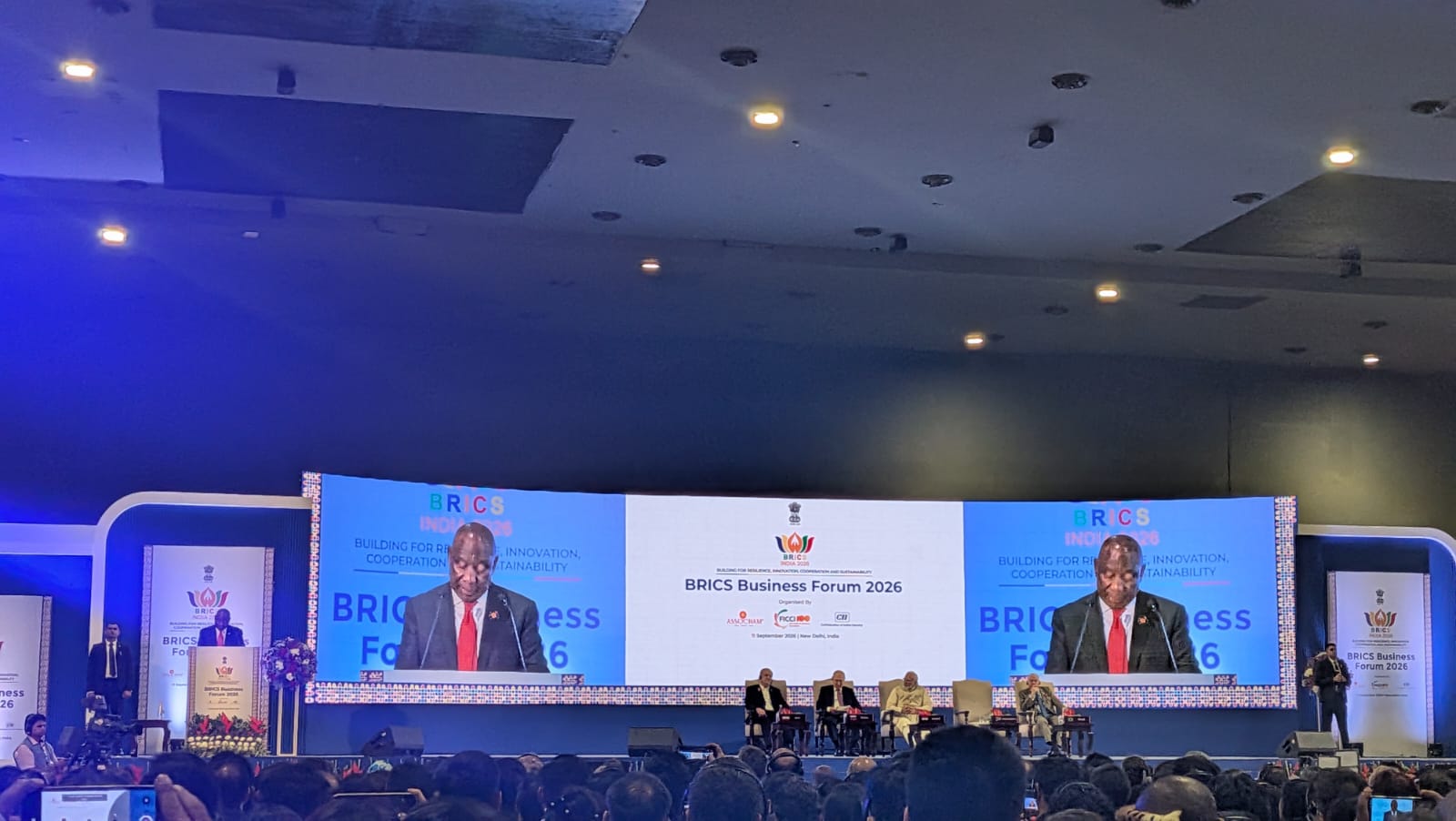
What follows is not a summary of the programme. It is the four things we are still thinking about three weeks later, written down while they are fresh enough to be honest and far enough away to be useful.
Scale is not the same thing as a market
With its expanded membership, BRICS now covers close to half the world’s population and a very large share of global agricultural production and consumption. Those figures get repeated at every forum of this kind, and they are easy to nod along to.
Sitting in the hall, the number landed differently. Almost every structural problem we work on in India (fragmented smallholdings, post-harvest loss, weak price discovery, farmers paid late and paid less) exists in nearly identical form in Ethiopia, Nigeria, Indonesia and Brazil. The crops change. The failure modes do not.
That is the opportunity and the trap in the same sentence. A platform built for Indian maize does not automatically work in Ethiopian cereals, because the regulation, the logistics, the payment rails and the trust relationships are all local. What does transfer is the method: aggregate smallholders into a unit large enough to matter, measure quality at the point of collection, record the transaction so it can be verified later, and pay quickly.
BRICS+ is not one market we can sell into. It is a set of markets with a shared problem, which means the thing worth exporting is the approach, not the product.
So our reading of the scale number is deliberately unromantic. We left Delhi considerably more interested in partnership structures than in export volumes.
Why is East African certification really a traceability problem?
The most valuable hour of our day had nothing to do with buying or selling grain. It was a discussion of what East African exporters now have to prove to European buyers.
The short version: European market access for agricultural commodities increasingly depends on documentation rather than on the goods themselves. Exporters are asked to show where a consignment was grown, often down to the plot. They are asked to demonstrate compliance with residue limits, to evidence environmental and labour conditions, and to produce an unbroken chain of custody from farm to port.
A buyer in Rotterdam may be perfectly happy with the quality of the coffee, the sesame or the pulses, and still decline the consignment because the paperwork cannot be substantiated.
For a large plantation this is an administrative cost. For an exporter aggregating from thousands of smallholders, it is close to impossible. You cannot retrospectively attach a verified origin to a sack that passed through four intermediaries, none of whom recorded anything. The commodity is fine. The provenance has evaporated.
This is the part that stopped us, because it is precisely the problem our platform was built to solve, just for a different reason. We record provenance at the point of aggregation because we wanted to reduce post-harvest loss and settle quality disputes between farmer and buyer. That record has taken post-harvest loss from roughly a fifth of the crop down to a small fraction of it, and it lets us pay farmers on the spot because the quality assessment is already done and agreed.
What we built it for
An efficiency toolLower loss, faster settlement, fewer disputes. A real benefit, but one we have to persuade a buyer to value, every single time, against the way they already work.
What it also is
A compliance assetThe same record is the difference between a consignment that clears and one that sits. Nobody has to be persuaded that compliance matters. The importer has already decided.
That reframing matters commercially. Efficiency gains have to be argued for. Compliance does not need that argument. If the European buyer will not accept the consignment without verified origin, the exporter needs verified origin, and the only question is who can supply it at smallholder scale and at acceptable cost.
The honest version
We are not claiming we can walk into Addis Ababa and solve this. Certification regimes are specific, auditable and unforgiving, and a system has to satisfy the auditor rather than the engineer who built it.
But we recognise the structure of the problem: many small producers, a buyer demanding farm-level evidence, and nothing in between to generate it.
Could the same record unlock finance?
One vital lesson from the day came from conversations about money rather than crops. The smallholder’s hardest problem is often not the harvest. It is the months either side of it. Farmers sell at harvest because they need cash, which is when prices are lowest. And one bad season, whether a failed monsoon, a flooded store or a rejected consignment, can wipe out several good ones, because very little in the chain is insured.
Two financial tools address this directly, and both are underused across the BRICS economies.
Warehouse receipts
Stored grain as collateralA farmer deposits graded produce in an accredited warehouse and receives a receipt a bank can lend against. Cash arrives at harvest without selling at the harvest price.
Supply chain insurance
Risk priced on evidenceCover for crop, storage and transit loss. Insurers can only price it fairly when they can see what was stored, where, and in what condition.
Both instruments depend on the same thing. A lender or insurer has to trust that the produce exists, is the grade claimed, and is where the receipt says it is. Where that trust is missing, receipts are discounted or refused and premiums are priced for the worst case. The instrument is not the bottleneck. The evidence behind it is.
The provenance record we built to settle quality disputes is also the collateral file a bank needs and the claims file an insurer needs.
Several BRICS members already run warehouse receipt systems. What is missing is anything that works across borders. A receipt issued in one country means little to a lender or buyer in another, because grading standards, warehouse accreditation and insurance terms do not line up.
Where BRICS cooperation could help
- Mutual recognition of warehouse accreditation and grading, so a receipt issued in one member market can be financed in another.
- Shared data standards for stored and in-transit produce, so insurers can price risk from records rather than assumptions.
- Pooled reinsurance for smallholder supply risk, which private insurers are unlikely to carry alone.
We are not a lender or an insurer, and we do not plan to become one. But this sharpens the case for what we already do. If the record made at a village collection point is good enough for a buyer in Rotterdam, it should be good enough for a bank financing the harvest and an insurer covering the store. That makes us a natural partner for the institutions that are.
What the hardware on display taught a software company
The forum was not an agriculture event, and that was good for us. Russian aerospace technology was showcased, alongside manufacturing, energy, digital infrastructure and medical devices from across the bloc.
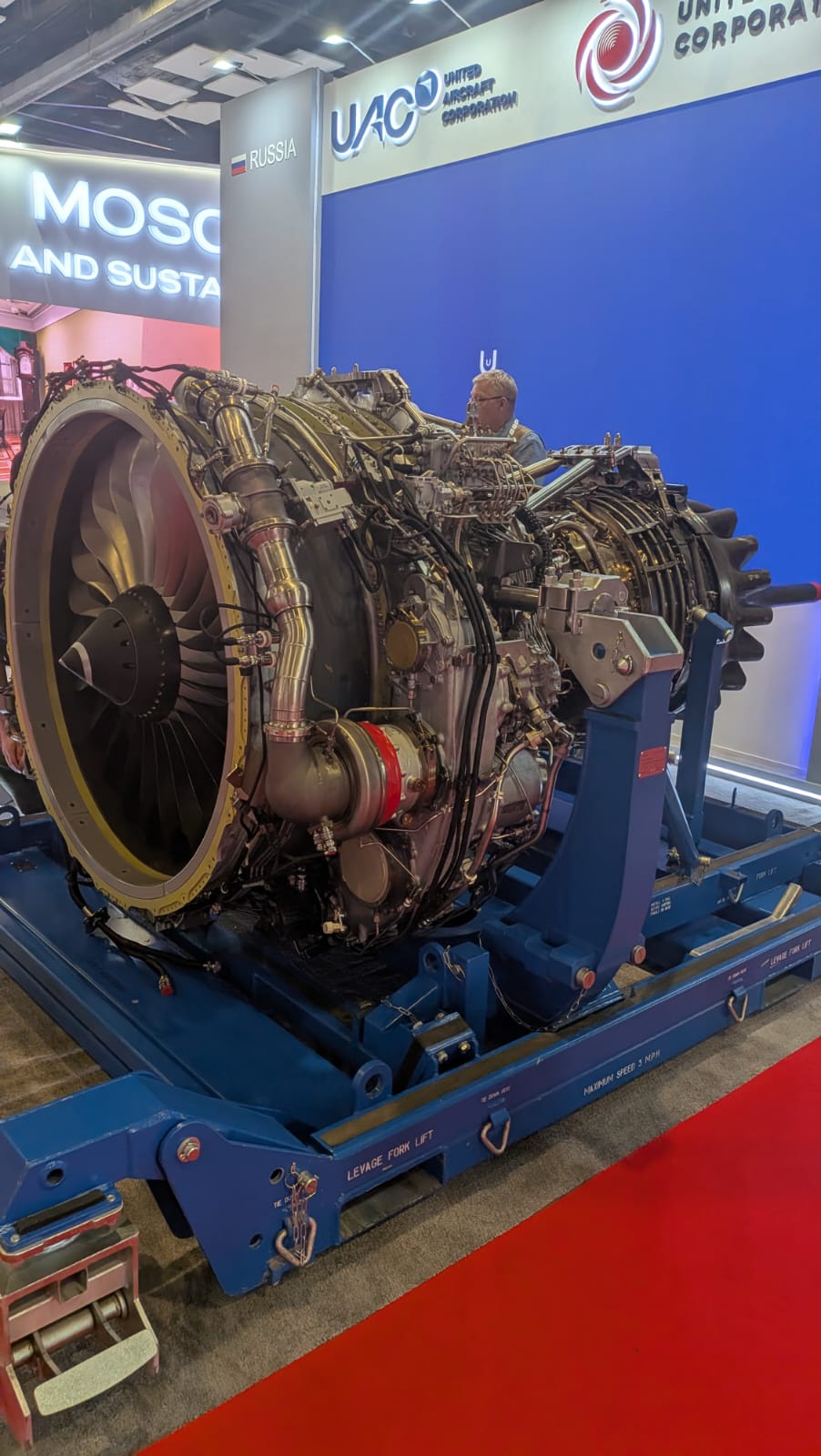
Standing in front of an aircraft is a useful corrective when you spend your working life inside a mobile application. These are industries where tolerance for failure is near zero, where certification is measured in years, and where the supply chain is documented to a standard that agriculture rarely approaches.
Agricultural supply chains are not held to anything like that bar, and the gap is not really about technology. We already have the sensors, the connectivity and the ledgers. What aviation has that agriculture does not is an accepted discipline of recording: a culture where the record is part of the product, not an overhead imposed on top of it.
That is a more interesting benchmark for us than any competing agritech platform. The question is not whether we can match another app. It is whether a sack of maize leaving a village collection point can carry the same quality of evidence as a component leaving a factory floor.
Dusting off the Mandarin
A smaller note, and a personal one. We had not used our Mandarin in a long time, and the forum gave us a reason to.
It was rusty. The vocabulary of agricultural trade is not the vocabulary you learn in a classroom, and we reached for words that did not come. But the response to the attempt was out of all proportion to its quality, which is usually how this works.
There is a practical lesson underneath the anecdote. At an event where every substantive conversation can be held in English, the people who make the extra effort are the ones who are remembered at the end of a day of fifty meetings. Language is not just courtesy; it signals that you intend to be in the relationship for longer than one transaction.
For a company our size, talking to organisations many times larger, that signal is one of the few advantages available. We cannot compete on volume. We can be the counterpart who prepared. We are keeping the practice going.
Would our platform actually work for mushrooms in Uttarakhand?
The part of the day we have talked about most since was not on our schedule at all. The forum recognised women entrepreneurs from across the BRICS nations. We met one of the winners and spent a while on her mushroom cultivation project in Uttarakhand.
It is a good business and a hard one. Mushrooms suit hill agriculture well: they need little land, they generate income through the year rather than at one harvest, they can be grown on agricultural residue, and the work can be organised around a household. For women’s collectives in particular, they are one of the few options that do not require land title.
The difficulty is everything after the growing. Mushrooms are extremely perishable. Shelf life is measured in days, not months. Prices move sharply with local supply, so a good week for your crop is usually a bad week for your price. Grading is inconsistent, which gives the intermediary room to discount at the point of collection, and the grower, holding a product that will not keep, has very little ability to argue.
We found ourselves asking whether our platform would help here. The honest answer is: partly, and not without changes.
| What we built | Does it transfer to perishables? | Why |
|---|---|---|
| Smallholder aggregation | Yes | The volume problem is identical. A serious buyer will not deal with twenty growers individually. |
| Grading at point of collection | Yes | Removes the discretionary discount. Matters more, not less, when the grower cannot walk away. |
| Spot payment | Yes | Critical. A grower with a three-day product has no capacity to wait for settlement. |
| Provenance record | Yes | Buyers pay a premium for verified organic or residue-free cultivation. The record is already the asset. |
| Warehouse-and-wait sequencing | No | Cereals can sit while a buyer is found. Perishables invert this: the buyer must be matched before harvest. |
| Logistics layer | Not as built | Cold chain is a genuinely different and more expensive problem than dry haulage. |
An assessment, not a product plan. Every row would need testing against a real collective before we would claim any of it.
So the answer is not a straightforward yes. But the conversation was the most useful of the day, because it tested our assumptions against a crop we do not grow and a geography we do not work in, and showed us exactly which parts of what we have built are general, and which are maize-shaped.
Where we go from here?
Three things, in order of how much work they require.
First, we are reframing how we describe what we do. We have been selling post-harvest loss reduction, which is a real benefit but an argument we have to win each time. Verified provenance is a requirement someone else imposes. Same system, different conversation, and the second one is shorter.
Second, we are taking East African market entry seriously rather than opportunistically. Our West African work gives us a reference, but Ethiopia and its neighbours are their own markets with their own rules. The route in is likely to be alongside an exporter who already has the buyer relationships and is missing the evidence layer.
Third, we are looking properly at perishables. Not as a pivot, since cereals remain our business, but as a question about which parts of our platform are genuinely crop-agnostic. Uttarakhand gave us a sharper version of that question than any internal review would have.
If you are working on any of this (smallholder aggregation, export certification, traceability for perishable produce), we would like to hear from you. The most useful conversations we had in Delhi were with people doing adjacent work in unfamiliar places, and we would rather have more of those than fewer.
Notes
- BRICS 2026, under India’s chairship. Source
- BRICS Business Forum 2026, co-organised by FICCI with the Government of India, Bharat Mandapam, New Delhi, 11 September 2026.
- Observations on European certification requirements are drawn from forum discussion rather than from a regulatory reading. Exporters should take specific advice on the regimes that apply to their commodity and destination market.
- Observations on warehouse receipt finance and supply chain insurance are drawn from forum discussion. They are not a review of any national scheme.
- Post-harvest loss figures are from RootsGoods operations and are indicative of our own working range, not an industry benchmark.
RootsGoods builds supply chain infrastructure for agricultural producers, working with farmer producer organisations in India and on pilot projects in West Africa and Canada. Get in touch.