Poultry Feed Blog Series: 2

Maize is the primary energy and protein base in broiler and layer rations across India. When procurement buys maize without knowing its protein content, the nutritionist compensates with soya meal. That compensation is expensive and it is happening in every Indian feed mill that buys uncertified grain.
Indian maize protein ranges from 7.5% to 10.5% depending on variety, growing conditions, and post-harvest handling. The difference between a 7.8% lot and a 9.4% lot is not visible at intake. But in a standard broiler finisher ration at 500 tonnes per month, that 1.6% protein gap requires approximately 18-22 kg more soya meal per tonne of feed produced to maintain the target amino acid profile.
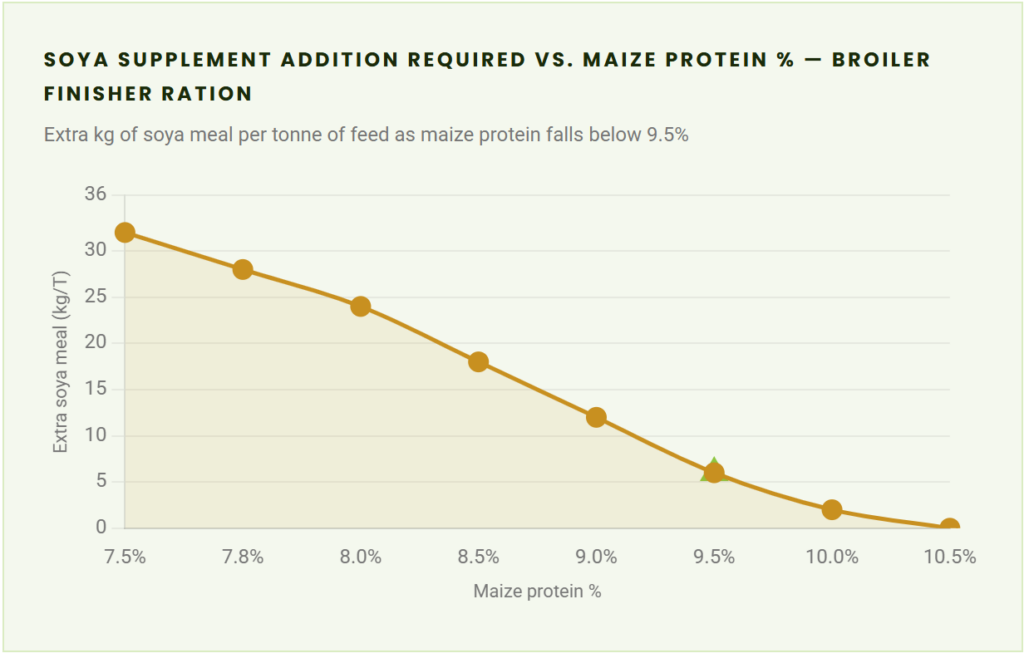
At current soya meal prices of Rs. 38-42 per kg, a consistent 1.5% protein shortfall on 500 tonnes monthly intake adds Rs. 34,000–Rs. 46,000 per month to your ingredient cost; hidden entirely within the raw material line. Feed conversion ratios suffer too: broilers on under-proteinised diets take longer to reach target weight, adding further cost per bird.
“Every kg of soya you add to compensate for unknown maize protein is a rupee that certified procurement would have saved.”
The solution is not to buy more expensive maize. It is to buy maize with a certified protein percentage so your nutritionist can formulate precisely rather than conservatively. A lot certified at 9.4% protein allows tighter soya inclusion. A lot at 8.2% demands a different formulation entirely.
RootsGoods certifies protein percentage via NIR spectroscopy at FPO level. Every lot arrives with a documented protein reading accurate to ±0.3%. Our enterprise API feed can push this data directly to your Brill formulation software, enabling lot-specific ration adjustment rather than blanket safety margins that inflate your soya spend.
RootsGoods Analytics Example
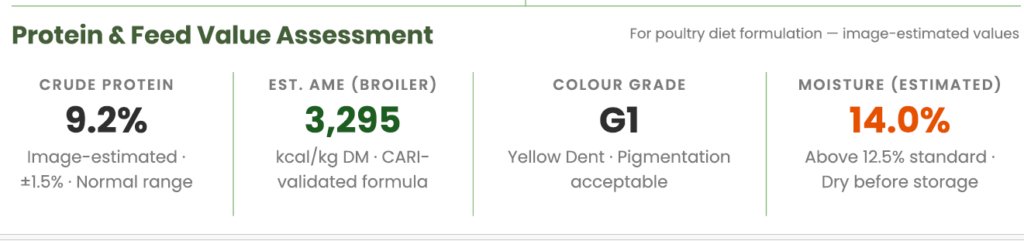
Buyers receiving protein-certified lots from RootsGoods report a reduction in soya inclusion of 12–18 kg per tonne of feed, a cost saving that pays for the quality intelligence subscription many times over.
In Part 3, we look at the most dangerous hidden cost of all: aflatoxin contamination and what a single contaminated consignment costs in flock mortality, veterinary bills, and batch condemnation.